We accept PayPal , All Card, All Crypto Payments.







Products




Facebook Accounts: Unlock the Powerful Benefits of Aged and New Profiles in 2026
Facebook accounts are widely used for communication, community participation, content sharing, networking, and business-related activities. In 2026, users may compare newer profiles with aged Facebook accounts or older profiles based on history, activity, security, and intended use. Understanding these differences can help users make more informed decisions.
Account age can provide some historical context, but it should not automatically be considered a sign of quality or performance. A profile that has existed for several years may still require careful security management and regular activity. Likewise, a newly created profile can develop a useful history through consistent and responsible use. This article explores the differences between established and new profiles and explains the factors that deserve attention.
Facebook Accounts in 2026: What Makes Them Different?
Facebook accounts can vary according to their creation date, activity history, profile information, connections, and security settings. A newer profile generally has less historical information, while an older profile may contain a longer record of previous activity.
The difference between profiles is not limited to age. Current activity, account security, profile authenticity, and responsible management can all influence how a profile should be evaluated.
How Pro file History Matters
Profile history can provide useful context about previous activity and development. However, a long history does not automatically mean that the profile is currently active or well maintained.
Why Current Activity Is Important
Current activity can sometimes provide more useful information than the original creation date. An older profile may have very little recent activity, while a newer profile may be actively maintained.
Looking Beyond Account Age
Account age should therefore be viewed as one factor among several. Security, recovery information, profile consistency, and appropriate activity deserve equal attention.
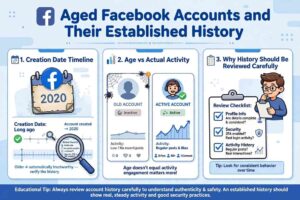
2. Aged Facebook Accounts and Their Established History
Aged Facebook accounts are generally profiles that have existed for a longer period. Their extended history may provide more background information than a recently created profile.
What Are Aged Facebook Accounts?
Aged Facebook accounts may have a longer creation history and potentially more previous activity. However, not every established profile has the same type or quality of history.
Users should examine available information carefully rather than assuming that age alone makes a profile more valuable.
Understanding Account Age
The age of a profile indicates how long it has existed, but it does not show exactly how actively it was used during that period.
A profile could have existed for several years while receiving little recent activity. Therefore, account age should always be considered together with other available information.
Age Versus Actual Activity
Recent activity can help provide a better understanding of the current condition of a profile. Historical age and present activity are separate characteristics and should not be treated as the same thing.
Why History Should Be Reviewed Carefully
Users considering aged Facebook accounts should look at relevant information rather than relying only on the profile’s creation date. This approach can help create more realistic expectations.
3. New Facebook Accounts: Building From the Beginning
New Facebook Accounts provide users with a fresh starting point. Because these profiles have a shorter history, there may be less background information available during the early stages of use.
What Defines New Facebook Accounts?
New Facebook accounts are generally profiles that have been created recently. Their history develops gradually as users add information, interact with others, and use the platform appropriately.
Creating a Strong Profile
A new profile should contain accurate information and appropriate privacy and security settings. Starting with good practices can make ongoing management easier.
Building Legitimate Activity
Normal and genuine activity can help a profile develop naturally over time. Users should focus on appropriate interactions and content rather than trying to artificially create a history.
Long-Term Profile Development
A profile’s value should not be determined entirely by its age. Consistent management, appropriate activity, and good security practices can contribute to long-term profile health.
4. Old Facebook Accounts vs New Facebook Accounts
Old Facebook accounts and newer profiles may have significant differences in historical information. However, neither type should automatically be considered better for every situation.
Differences in Account History
Older profiles may contain more historical information, while newer profiles generally have less background. The usefulness of that history depends on the user’s legitimate purpose.
Activity and Profile Development
Current activity matters regardless of when a profile was created. A long history does not necessarily mean that a profile is actively maintained today.
Security Considerations
Security remains important for every profile. Users should review passwords, recovery options, privacy settings, login activity, and other relevant security controls.
Choosing Based on Purpose
When comparing profiles, users should consider their actual requirements instead of choosing simply because a profile is older or newer.
5. Powerful Benefits of Established Profiles
Established profiles may provide more historical context than recently created ones. However, these potential benefits should be viewed realistically.
A longer history can make it easier to understand how a profile developed over time. Facebook accounts with established histories may contain more previous information, but this does not guarantee better results.
Longer Historical Information
An established profile may have a longer record of profile development and previous interactions. This can provide useful background when reviewing the profile.
More Background Context
Older profiles can sometimes contain more information than recently created ones. Users should consider the actual information available rather than making assumptions based only on age.

Existing Profile Development
A profile that has been maintained consistently may have a developed structure, connections, and activity history. These characteristics can be more relevant than age alone.
Understanding the Limitations
Age does not guarantee reach, visibility, approval, security, or continued access. Platform requirements and account conditions can change over time.
6. What Matters Beyond Facebook Account Age?
Looking beyond age is essential when evaluating different profiles. Facebook accounts should be considered from several perspectives, including security, authenticity, activity, and management.
Security and Recovery Information
Recovery information should be accurate and appropriately controlled. Strong security practices can help protect continued access to a profile.
Login and Activity Review
Regularly reviewing login activity can help identify unfamiliar access or unexpected changes. Monitoring security is useful for both older and newer profiles.
Profile Authenticity
Accurate and consistent profile information can contribute to a more reliable online presence. Account age should never be treated as a replacement for authenticity.
Responsible Management
Responsible management includes maintaining appropriate activity, reviewing security settings, and following applicable platform requirements.
7. Common Mistakes When Evaluating Aged Profiles
People can sometimes place too much importance on age when comparing profiles. This may lead to unrealistic expectations or overlooking more important factors.
Assuming Older Always Means Better
An older profile is not automatically better than a newer one. Its current condition, activity, security, and available information should also be considered.
Ignoring Security Settings
Security should not be overlooked simply because a profile has existed for a long time. Passwords, recovery information, privacy controls, and login activity remain important.
Focusing Only on Historical Age
Age provides limited information about the present condition of a profile. Users should also consider current activity and profile consistency.
Expecting Guaranteed Results
No profile age guarantees performance, visibility, advertising outcomes, or protection from restrictions. Results can depend on many different factors.
8. Smart Ways to Manage Facebook Accounts in 2026
Good management can help maintain secure and consistent Facebook accounts over the long term. The focus should be on responsible usage rather than simply increasing age.
Review Security Regularly
Users should periodically review login activity, privacy settings, recovery options, and other security controls. Regular checks can help identify potential problems early.
Keep Information Consistent
Accurate and consistent profile information can make ongoing management easier and support a reliable online presence.
Monitor Important Changes
Pay attention to changes involving passwords, recovery information, profile details, and unfamiliar login activity.
Maintain Long-Term Account Health
Long-term management should focus on security, authentic information, appropriate activity, and compliance with platform requirements.
9. Practical Factors to Consider Before Choosing a Profile
Before choosing between different profile types, users should consider several practical factors. Looking at multiple characteristics provides a more balanced evaluation than focusing on age alone.
Check Available Profile Information
Review the information that is available and consider whether it appears consistent with the profile’s current use and history.
Consider Security and Recovery
Security and recovery options are essential for maintaining continued access. Relevant information should be accurate and properly controlled.
Evaluate Current Activity
Current activity may provide more useful information than account age alone. Consider whether the profile has been maintained consistently.
Understand Platform Requirements
Users should understand applicable platform policies and requirements before using a profile. Older profiles do not receive exemptions from these rules.
10. Comparing Aged, Old, and New Profiles
Different profile types can serve different legitimate purposes. A careful comparison should consider more than creation dates.
Aged Profiles and Their History
Aged Facebook accounts may offer longer historical information, but users should evaluate that history carefully instead of assuming it represents current activity.
New Profiles and Their Potential
New Facebook accounts provide a fresh starting point and can develop a legitimate history through consistent and appropriate use.
Old Profiles and Current Activity
Old Facebook accounts may have extensive historical information, but current activity and security should still be reviewed before drawing conclusions.
Choosing the Appropriate Option
The most suitable profile depends on the user’s needs, management approach, security practices, and intended use. A balanced evaluation can help avoid unrealistic expectations.
11. Frequently Asked Questions About Facebook Accounts
What Are Aged Facebook Accounts?
Aged Facebook accounts are profiles that have existed for a longer period. Their age may provide historical context but does not guarantee quality or performance.
How Are New Facebook Accounts Different?
New Facebook accounts generally have less historical information and are developed from the beginning through ongoing activity and responsible management.
Are Old Facebook Accounts Always Better?
No. Old Facebook accounts are not automatically better because security, activity, authenticity, and intended use also matter.
Does Account Age Guarantee Better Performance?
No. Account age does not guarantee visibility, reach, approval, or protection from platform restrictions.
What Should You Consider When Comparing Profiles?
Consider account history, current activity, security, recovery information, profile authenticity, and applicable platform requirements.
Conclusion: Making Smarter Decisions About Facebook Accounts
Facebook accounts can differ significantly in age, history, activity, security, and profile development. Aged Facebook accounts and old Facebook accounts may provide more historical context, while new Facebook accounts offer a fresh starting point.
The most important lesson is that age should not be treated as a guarantee of quality or performance. Users should evaluate security, current activity, accurate information, recovery options, and responsible management alongside historical information.
Understanding the difference between established and new profiles can help users make more informed decisions. A longer history may provide useful context, but responsible usage and compliance with platform requirements remain essential. Before managing a profile, review available information, check security and recovery settings, understand applicable platform policies, and focus on maintaining a consistent and responsible online presence.